


Burns
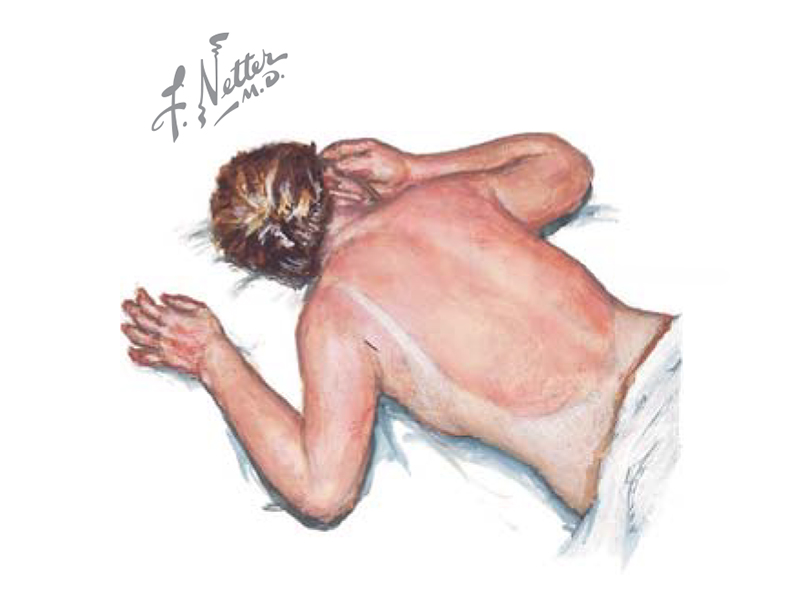
What Are Burns?
Thermal burns are injuries to the skin (and deeper structures)
caused by too much heat or certain types of light. Intense heat
for a short time (e.g., hot grease) and low heat or light over long
times (e.g., heating pads or sun) produce burns. The depth of
tissue injury determines burn severity. Thermal burns are usu-
ally classifi ed as fi rst, second, and third degree. Fourth-degree
burns extend into the muscle below the skin. Electricity and
chemicals such as acids and alkali may also cause burns. Chem-
ical burns are more complicated and hard to classify. Electrical
burns may be deep enough to reach muscles and bones and are
sometimes called fourth-degree (black or char) burns.
Frost bite
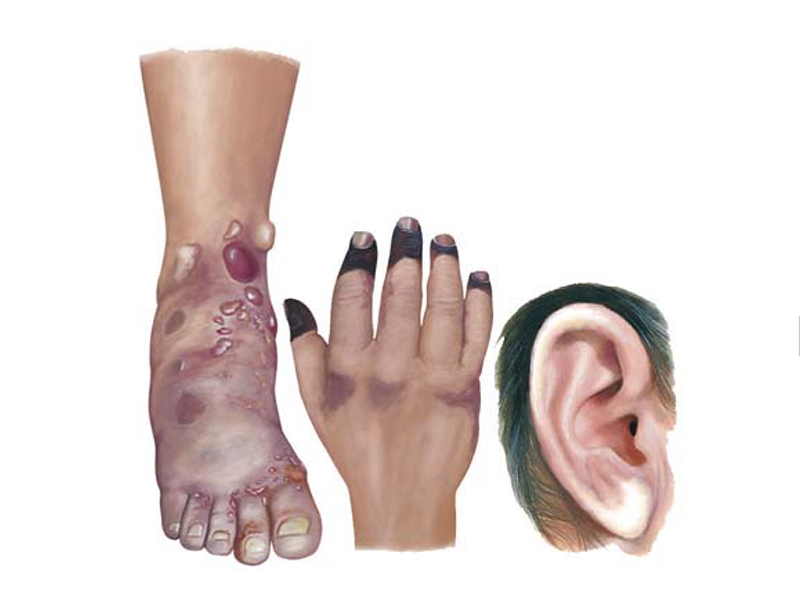
What Is Frostbite?
Frostbite is the condition in which living human tissues freeze
and are damaged because of exposure to low temperatures.
Frostbite will most likely affect the hands, feet, nose, and ears.
Frostbite can be a very serious injury. Recovery of nearby
tissues can take weeks. People can lose skin, fi ngers, and toes as
well as have deformities and discoloration. People who have
frostbite may also suffer from low body temperature (hypother-
mia).
Children and the elderly are at greater risk than adults.
Melanoma
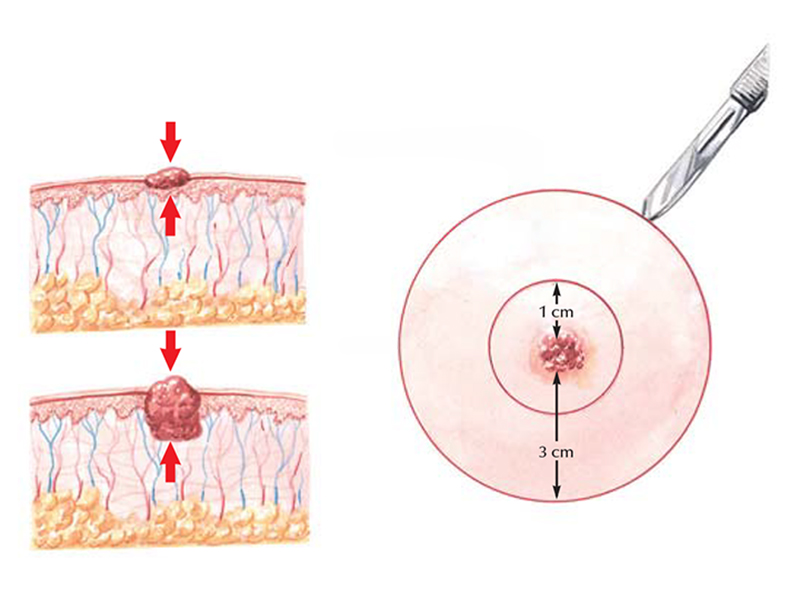
What Is Melanoma?
Melanoma is a skin cancer that begins in melanocytes. Melano-
cytes are skin cells that make pigment. Most melanomas appear
as new moles; some start from a mole already present. Mela-
noma starts in the mole, spreads nearby and then deeper into
the skin, into veins and lymph nodes, and fi nally into the liver,
brain, lungs, and bones.
The number of new cases in the United States increased
greatly in the last 25 years. If found early, about 85% of mela-
nomas are curable.
Melanoma Recurrence
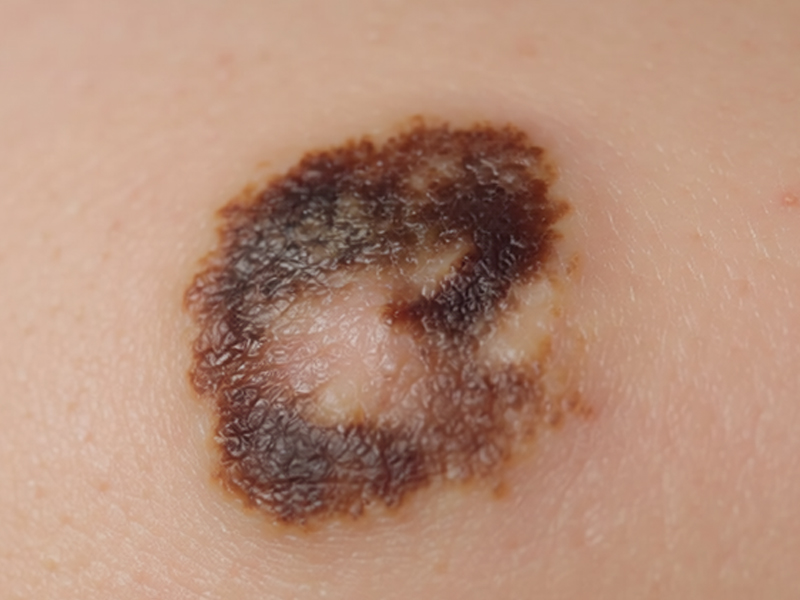
When melanoma comes back after it has been treated, it is called a recurrence (or
return). When a recurrence comes back in the same spot it was removed, it is called a
local recurrence. It may come back in other parts of the body distant to this. This is
called metastatic disease or metastases. If you have had melanoma in the past, you are
at increased risk for recurrence. Some patients with a past history of melanoma develop
a second primary tumor (a recurrence of the tumor in the same location) over time.
Keloids
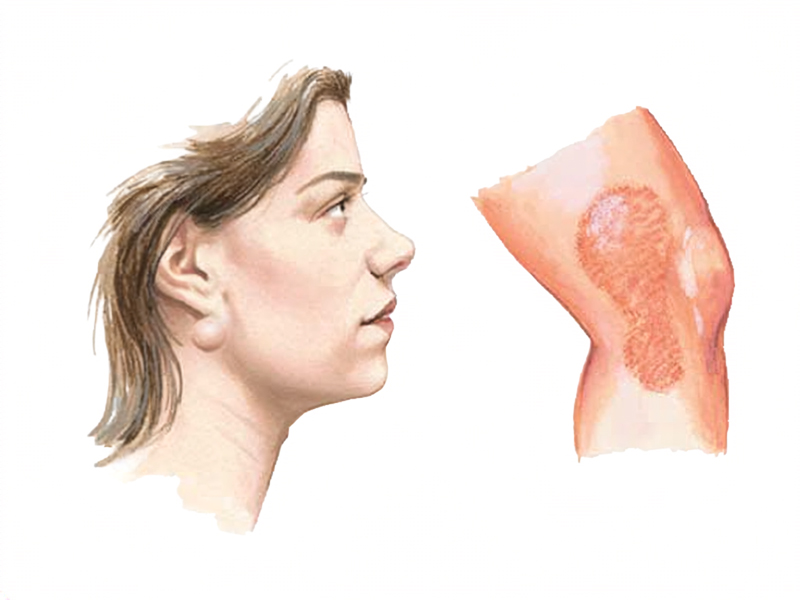
What Are Keloids?
Keloids and scars that are hypertrophic (meaning growing
abnormally large) are an overgrowth of scar tissue on the skin.
They can appear anywhere, usually in a place that was injured,
such as after a burn, severe acne, or a scratch.
What Causes Keloids?
Keloids result from too much scar tissue forming as a wound
heals. No one knows why they form. They cannot be caught
from someone else and aren’t skin cancer, but the tendency to
get keloids often runs in families. Keloids affect people of all
skin types but are more common in people with dark skin.